


Summary
- Bacillus subtilis and Bacillus velezensis are spore-forming Bacillus bacteria used as particularly stable probiotic cultures in modern feed supplements.
- Both microorganisms naturally occur in soil, plants, and microbial environmental communities and are studied in connection with gut flora, microbiome, and digestion.
- The most important difference: Bacillus subtilis has been extensively researched and established for decades, while Bacillus velezensis is a comparatively newly classified Bacillus species with growing importance in research and animal nutrition.
- Due to their resistant endospores, Bacillus cultures are considered particularly stable in storage and robust against external influences such as temperature or stomach acid.
- Probiotic Bacillus cultures serve to nutritionally support a balanced gut flora and are part of modern, gut-friendly feeding and nutrition concepts.
The importance of a healthy gut flora and a balanced microbiome is gaining increasing attention in both human and animal nutrition. Probiotic microorganisms, in particular, are at the forefront of modern feeding and nutrition concepts. In addition to well-known probiotic cultures such as lactic acid bacteria, spore-forming Bacillus strains are also being used more and more frequently today. Two names appear particularly often: Bacillus subtilis and Bacillus velezensis.
But what exactly lies behind these microorganisms? How do the two bacterial strains differ, and why are they considered interesting for modern probiotic supplements?
Bacillus cultures as part of modern probiotics
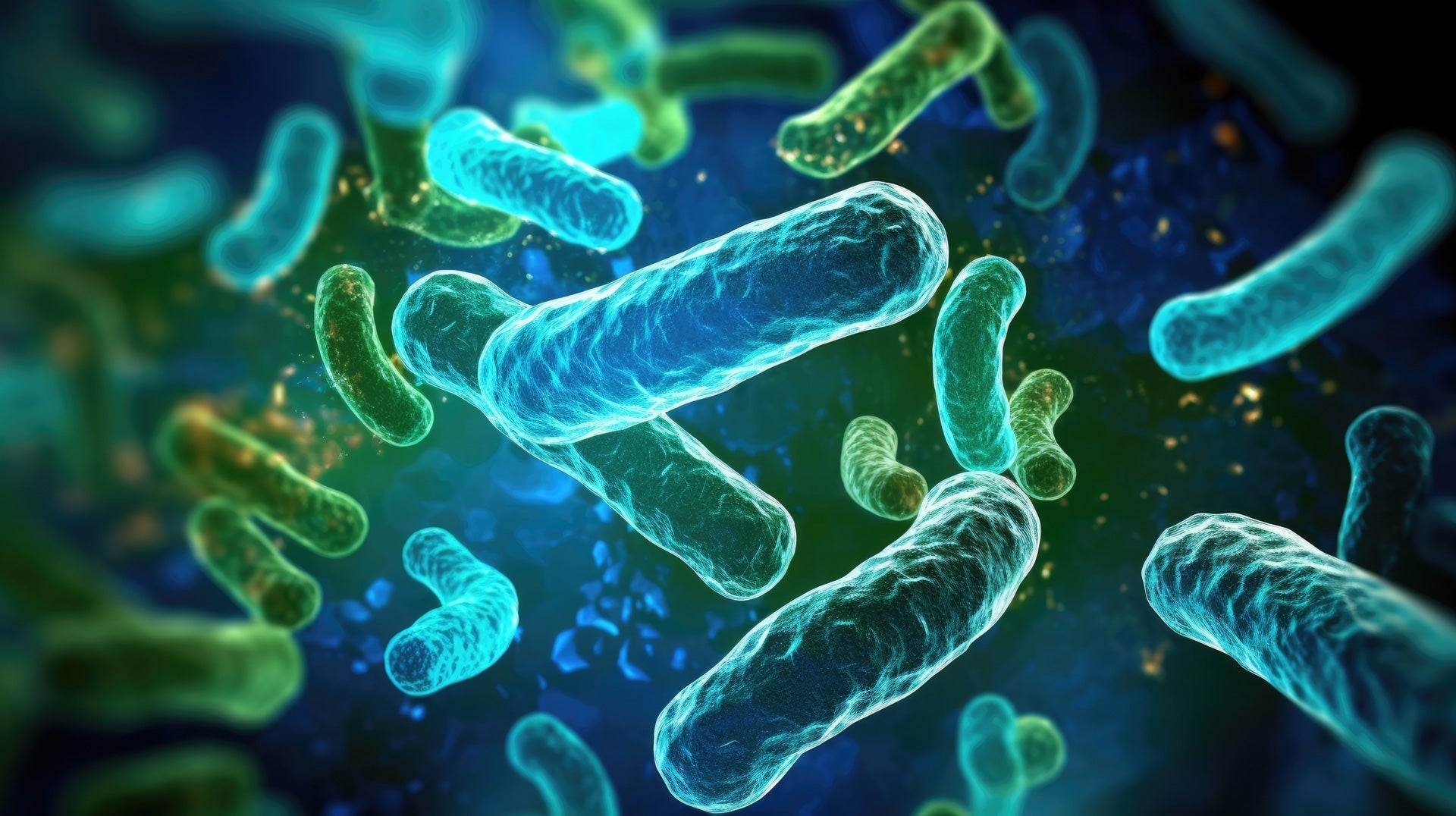
Bacillus species belong to the so-called gram-positive, spore-forming bacteria. They occur naturally in the environment and can be found, for example, in soil, on plants, or in natural microbial communities. Some of these bacterial strains are used in research, agriculture, and feed supplements due to their special properties.
Bacillus cultures are particularly interesting because of their ability to form resistant endospores. These spores help the microorganisms to relatively well withstand external influences such as temperature fluctuations, drought, or stomach acid. It is precisely this stability that makes spore-forming bacteria particularly attractive for modern probiotic products.
In contrast to more sensitive microorganisms, Bacillus cultures can often be processed and stored stably. That is why they are increasingly used in feed supplements for dogs, horses, and other animal species.
What is Bacillus subtilis?
Bacillus subtilis is one of the best-known and most thoroughly studied Bacillus species. The bacterium occurs naturally in soil, plant material, and various environmental areas. Bacillus subtilis has been used in various fields for many years – including fermentation processes, microbiological research, and animal nutrition.
Bacillus subtilis is frequently used, especially in probiotic feed supplements. The strain is mainly studied in connection with gut flora, digestion, and microbial balance. Due to its spore formation, it is considered comparatively robust and stable in storage.
Furthermore, Bacillus subtilis is extensively researched scientifically, which is why extensive data and experience are already available for this microorganism.
What is Bacillus velezensis?
Bacillus velezensis also belongs to the group of spore-forming Bacillus bacteria and is closely related to Bacillus subtilis. However, the microorganism was only more precisely classified as a distinct species within the so-called Bacillus subtilis kinship group through modern genetic investigations.
Like Bacillus subtilis, Bacillus velezensis also occurs naturally in the environment – especially in the soil, on plant surfaces, and in the root area of various plants.
In recent years, scientific interest in Bacillus velezensis has significantly increased. The microorganism is increasingly being studied, especially in the fields of microbiome research, agriculture, and animal nutrition.
Researchers are particularly interested in possible interactions with other microorganisms and in the role of the bacterium within microbial balances.
The most important difference between Bacillus subtilis and Bacillus velezensis
Although both bacteria are closely related and have many similarities, they are distinct species with their own genetic characteristics.
Bacillus subtilis is considered a classic and established Bacillus strain for decades with extensive scientific documentation.
Bacillus velezensis, on the other hand, is one of the newer and currently intensively researched Bacillus species. Modern microbiome research, in particular, is increasingly focusing on this strain.
Another difference lies in the focus of previous application. While Bacillus subtilis is already widely used in probiotic supplements and feed, Bacillus velezensis is more in the focus of new research approaches and innovative microbial concepts.
However, both bacteria have a crucial commonality: they form stable endospores and are therefore considered particularly resistant microorganisms.
Why are spore-forming probiotics so interesting?
The gut flora – also called the microbiome – consists of billions of microorganisms and is closely linked to digestion, metabolism, and general well-being.
Stress, changes in feed, medication, or an unbalanced diet can affect the natural balance of the gut flora. Therefore, many animal owners and those interested in nutrition rely on probiotic supplements for the nutritional support of a balanced gut flora.
Spore-forming Bacillus cultures offer some special features. Due to their robust structure, they are considered comparatively resistant to external influences and are well suited for dry feed supplements.
The properties that make Bacillus cultures interesting include:
- high storage stability
- robust processing
- good resistance to temperature fluctuations
- suitability for dry feed concepts
- comparatively stable passage through the digestive tract
As a result, Bacillus strains are gaining increasing importance in modern probiotic concepts.
What role does gut flora play?
The gut flora performs numerous important tasks in the organism. It is linked to digestion, feed utilization, and the general balance in the digestive system, among other things.
A balanced microbiome is therefore considered an important component of a needs-based diet.
Probiotic supplements are not intended to treat or cure diseases, but rather to provide nutritional support for the natural microbial balance.
Precisely for this reason, many animal owners today increasingly pay attention to high-quality probiotic cultures, natural ingredients, and well-tolerated feed supplements.
Are Bacillus subtilis and Bacillus velezensis safe?
As with all microorganisms, with Bacillus cultures, it is also crucially important to consider the specific strain, controlled production, purity, and proper use.
Certain strains of Bacillus subtilis have been studied and used in various fields for many years. Bacillus velezensis is also increasingly being researched.
However, it is important to exclusively use products from controlled production and with transparent quality control.
Conclusion: Two closely related Bacillus species with growing importance
Bacillus subtilis and Bacillus velezensis both belong to the spore-forming Bacillus bacteria and have many similarities. Both microorganisms are considered particularly stable probiotic cultures and are associated with modern concepts around gut flora, microbiome, and animal nutrition.
While Bacillus subtilis has been extensively researched and used for decades, Bacillus velezensis is gaining increasing attention in science and research.
Especially their resilience, stability, and suitability for probiotic feed supplements make both Bacillus species interesting for modern nutrition and feeding concepts.
However, it always remains important: Probiotic microorganisms serve nutritional support and do not replace a veterinary diagnosis or medical treatment.







Split: